LeapFive News
The RISC-V Software Ecosystem Seminar was successfully held in Zhuhai, and the LeapEMU product and ecosystem plan were officially launched.
Release time:
2025-09-19
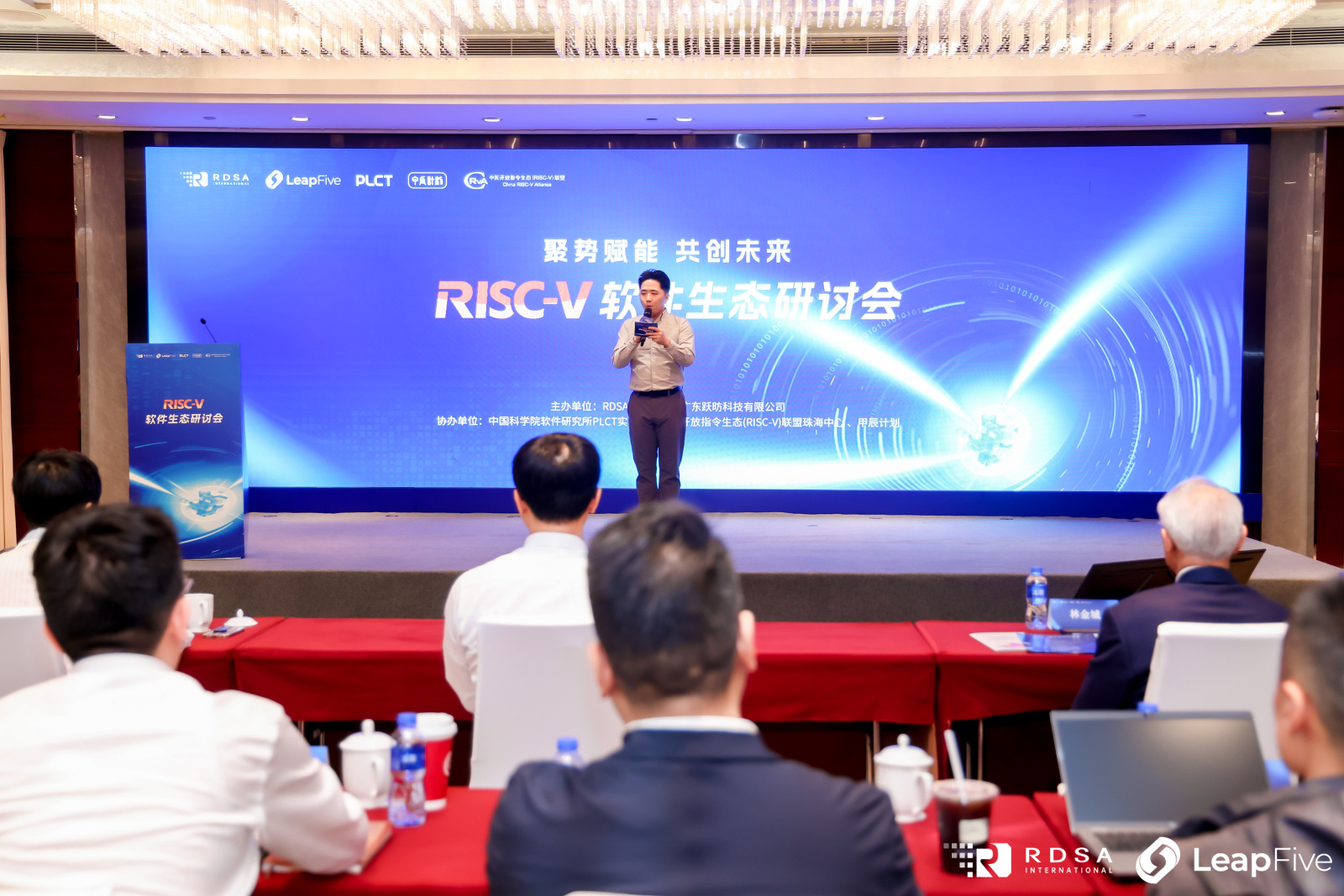
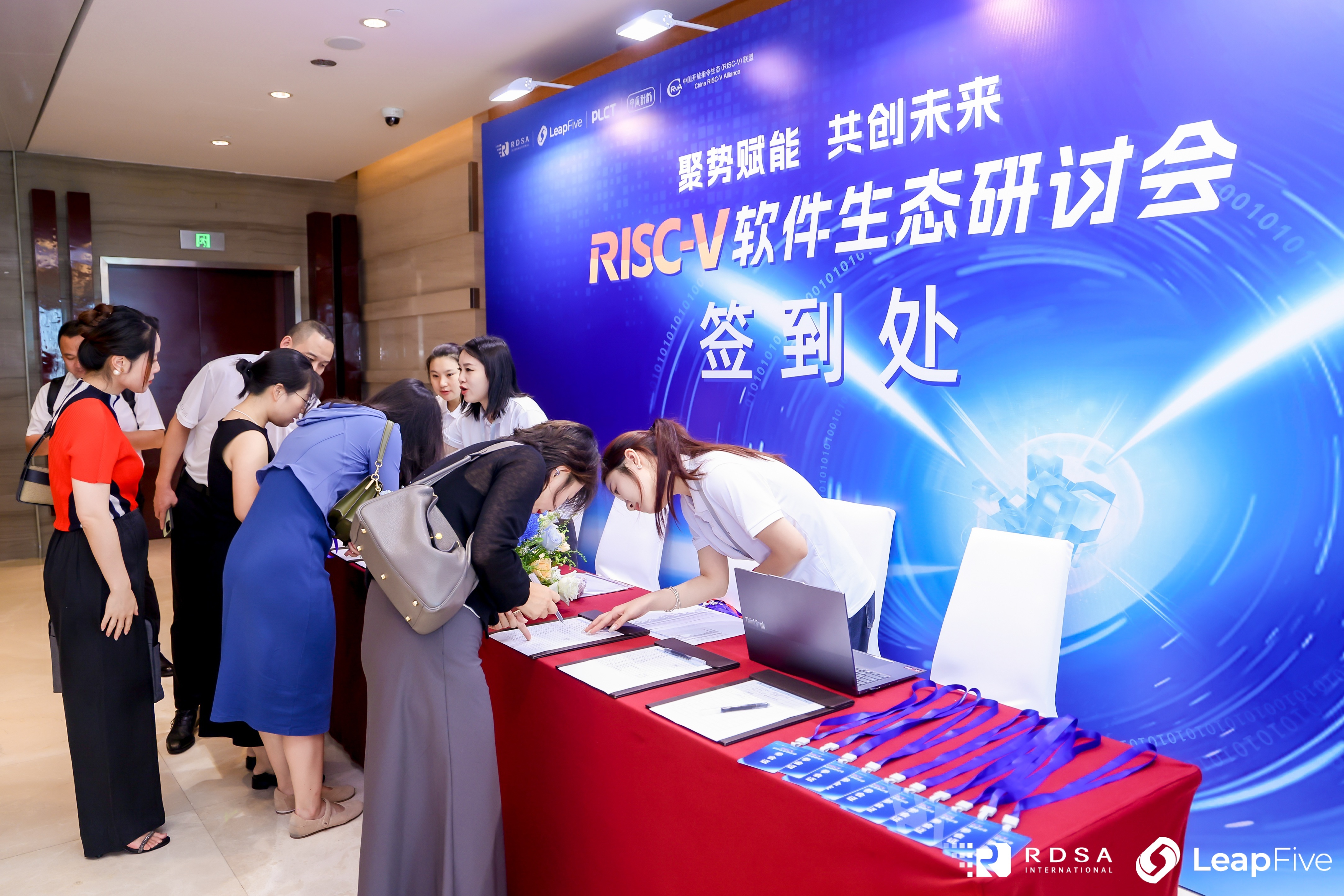
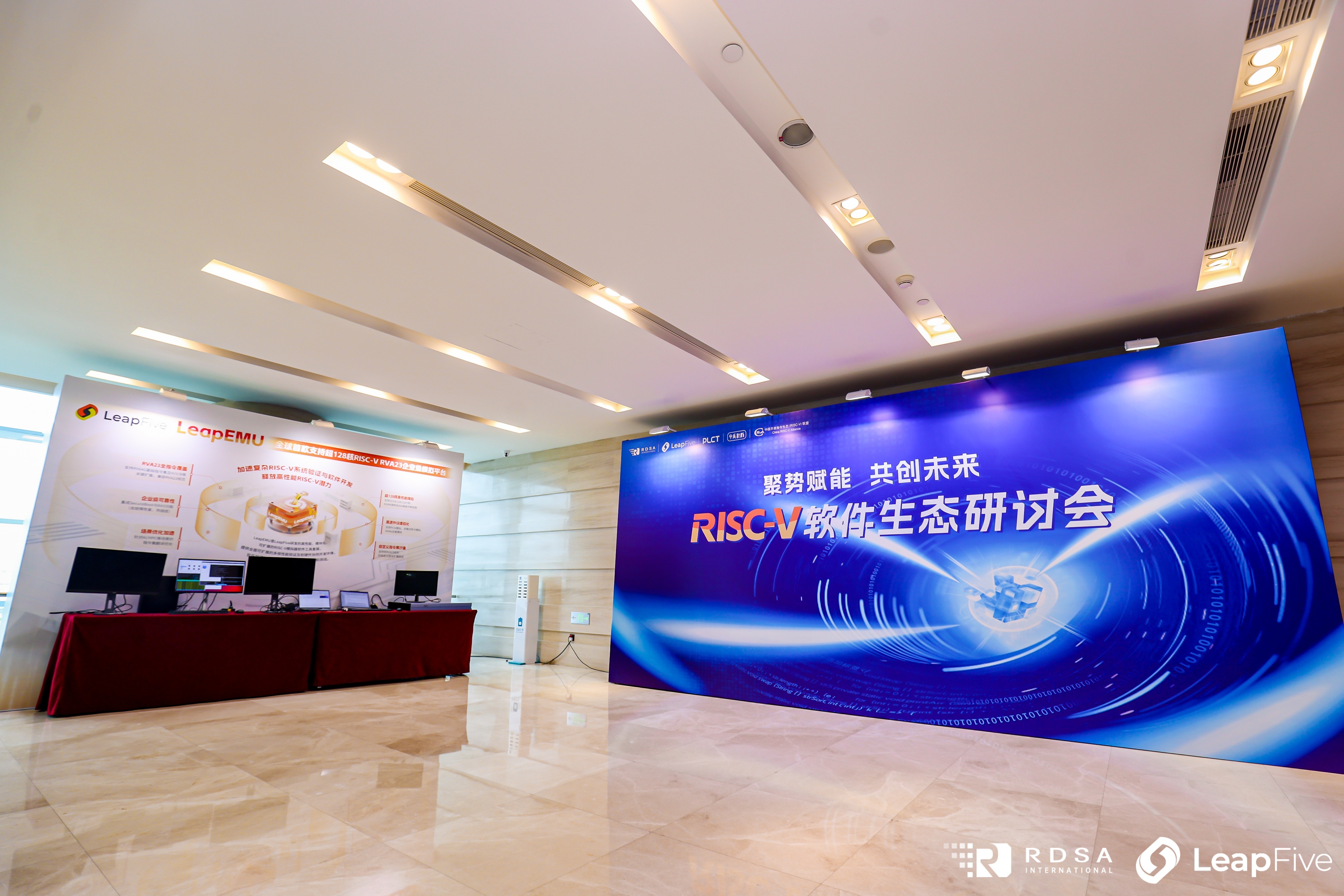
On September 19, 2025, an industry event focused on the development of the RISC-V software ecosystem—the “RISC-V Software Ecosystem Seminar”—was successfully held at the Zhuhai International Convention and Exhibition Center. The world’s first enterprise-grade emulation platform, LeapEMU, supporting over 128 RISC-V cores, has officially made its debut. At the same time, the LeapEMU ecosystem initiative has been launched, paving the way for RISC-V to enter a new era of high-end applications.
This conference is co-organized by the RDSA Industry Alliance and Guangdong Yuefang Technology Co., Ltd., with joint support from the PLCT Laboratory of the Institute of Software, Chinese Academy of Sciences, the Zhuhai Center of the China Open Instruction Set Ecosystem (RISC-V) Alliance, and the Jia Chen Initiative. The seminar brought together government leaders, industry experts, corporate representatives, and community developers to engage in an in-depth discussion on the challenges and opportunities facing the RISC-V software ecosystem, thereby injecting strong momentum into collaborative innovation across the industry.
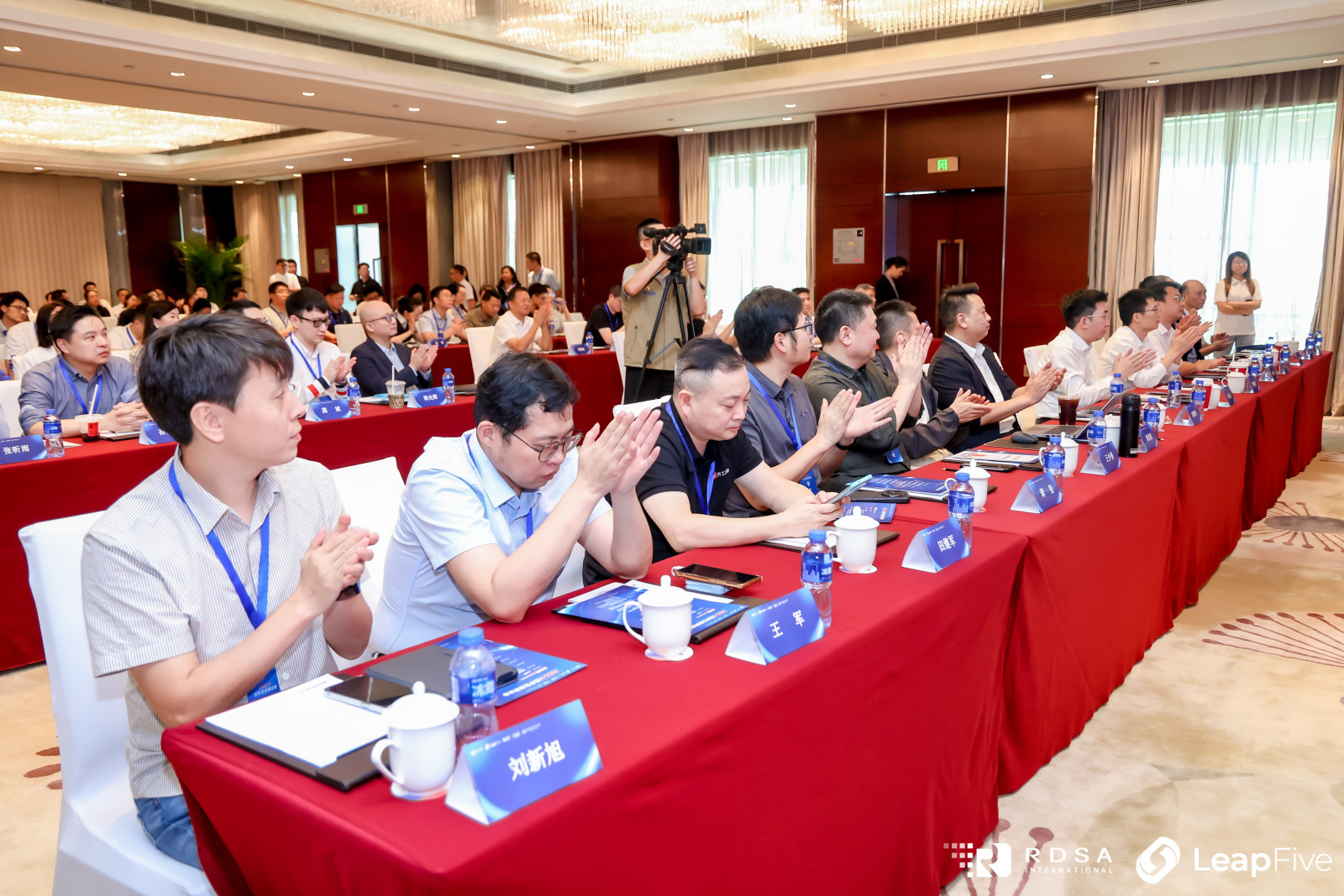
The AI era presents a golden opportunity for RISC-V.
Currently, the wave of artificial intelligence is sweeping across the globe with unprecedented intensity, driving an explosive surge in demand for computing power. As traditional computing architectures hit bottlenecks in terms of performance, energy efficiency, and customization, RISC-V—thanks to its open, streamlined, and scalable advantages—perfectly aligns with the core needs of the AI era and has become a key direction for the evolution of next-generation computing architectures.
Wu Zetong, Deputy Secretary of the Zhuhai Municipal Party Committee and Mayor, attended the seminar and delivered a speech. Wu Zetong welcomed the arrival of all the guests. He noted that in recent years, Zhuhai has accelerated the development of an open-source industrial ecosystem, collaborating closely with Macao and Hengqin to build innovative platforms, open up application scenarios, and attract top talent. As a result, Zhuhai has gradually established an open-source industrial matrix covering design, manufacturing, packaging and testing, and applications. Currently, Zhuhai is deeply studying and implementing the important speeches and instructions delivered by General Secretary Xi Jinping on Guangdong and Zhuhai. Focusing on emerging fields such as artificial intelligence, Zhuhai is further promoting the integration of “three innovations”—industrial innovation, technological innovation, and innovation in application scenarios—while accelerating the construction of “Cloud-based Smart City.” Moving forward, Zhuhai will further deepen its cooperation with industry organizations in the field of artificial intelligence, strengthen efforts to master core technologies, and leverage the international advantages of Qianhai and Macao to build an open, collaborative, and shared ecosystem. Zhuhai strives to become a leading and exemplary hub for RISC-V innovation with significant influence.
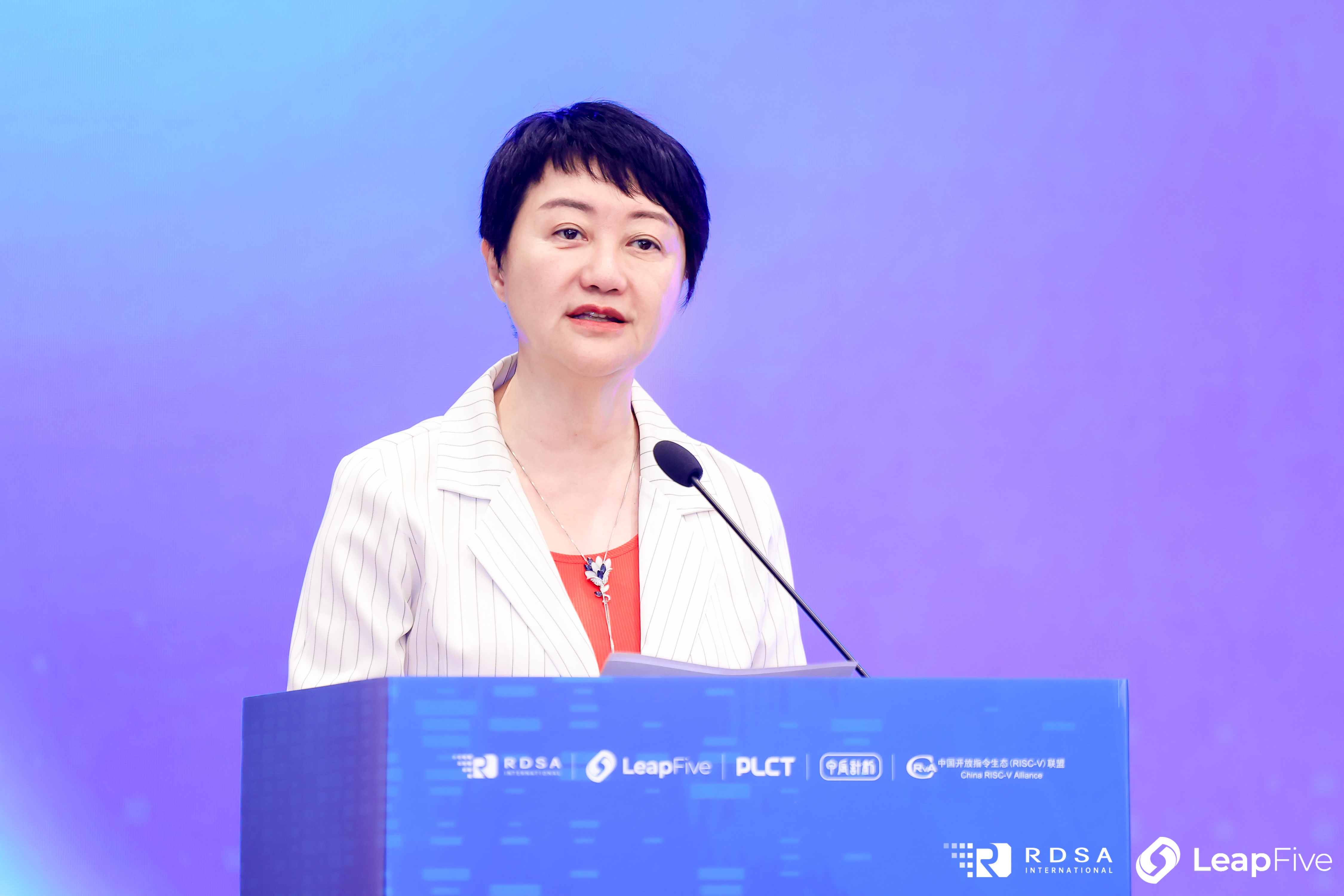
Dr. Jiang Chaohui, founder and CEO of Yuefang Technology, delivered a speech at the conference.
As an industry veteran, Dr. Jiang Chaohui, founder and CEO of Yuefang Technology, drew on his frontline practical experience to deliver a profound analysis at the conference of the common challenges currently facing the RISC-V software ecosystem—such as long development cycles and difficulties in multi-core verification—and officially launched Yuefang Technology’s enterprise-level solution: the LeapEMU simulation platform.
She emphasized that this platform can significantly shorten the development time for software and hardware co-design, transforming “waiting time” into “development time,” thereby helping RISC-V move from being “available” to “easy to use” and truly ushering in a new era of high-end applications.
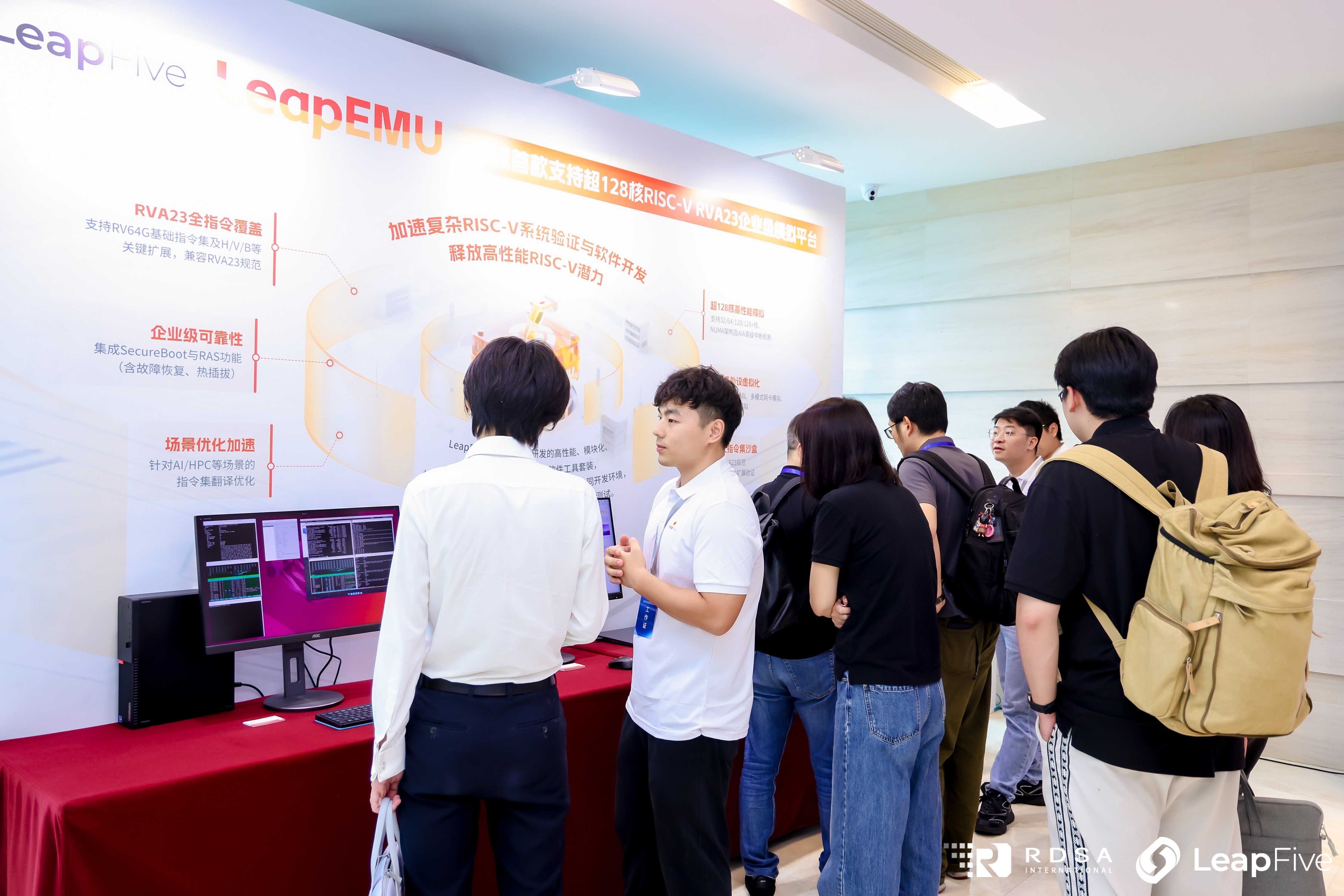
According to Yuan Bohu, Chief Operating Officer of Yuefang Technology, LeapEMU is the world’s first enterprise-grade emulation platform that supports over 128 RISC-V cores in the RVA23 architecture. This platform is dedicated to addressing key challenges faced by RISC-V during its development, such as the difficulty of multi-core verification and low efficiency in software-hardware collaboration, providing enterprise-level users with a high-performance, highly compatible development and verification environment.
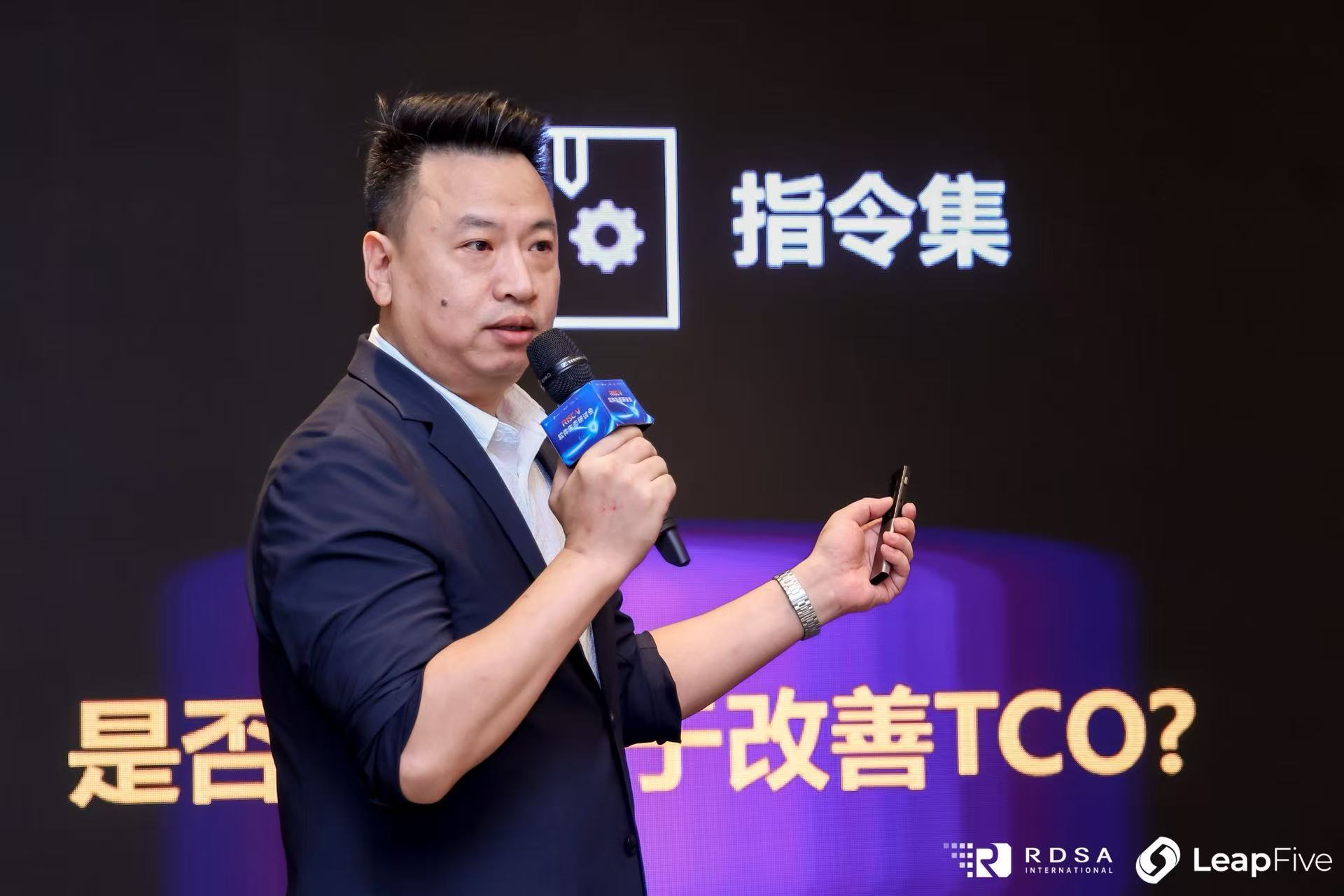
Yuan Bohu, Chief Operating Officer of Yuefang Technology, unveiled LeapEMU—the world’s first enterprise-grade emulation platform, RVA23, supporting over 128 RISC-V cores—at the conference.
According to the introduction, LeapEMU fully supports the RVA23 full instruction set and boasts parallel simulation capabilities with 32, 64, 128, and even more cores—far exceeding the performance limitations of mainstream open-source emulators. The platform delivers significant improvements in boot speed as well as single-core and multi-core operational efficiency. It also integrates enterprise-grade reliability features such as SecureBoot and RAS, and supports virtualization of high-speed peripherals like PCIe and NVMe. As a result, it can be widely applied in scenarios including chip design, software development, and system optimization.
Experts Discuss the Development Path and Industrial Practices of RISC-V
During the keynote session, several industry-leading experts took the stage in turn to share insights into the current state and cutting-edge trends of the RISC-V ecosystem, charting a clear path for its further development.
Jie Jing, Deputy Director of the Electronics Institute at the National Industrial Information Security Development Research Center and a researcher, delivered a presentation titled “Trends in the RISC-V Standard System and Software Ecosystem Development.” From the dual perspectives of national strategy and industry standards, she systematically reviewed the latest progress in RISC-V standardization efforts, conducted an in-depth analysis of RISC-V industry development trends and the latest developments in its software ecosystem, and provided a top-level perspective for reference in the industry’s further development.
Wu Wei, founder of the PLCT Laboratory at the Institute of Software, Chinese Academy of Sciences, provided an in-depth analysis on “Opportunities and Challenges in the RISC-V Software Ecosystem.” Drawing on the PLCT Laboratory’s long-term practical experience in the areas of toolchains and system software, he precisely identified the key bottlenecks currently facing the ecosystem in critical domains such as compilers, operating system adaptation, and multi-core scheduling. He also presented in detail the roadmap for the Jia Chen Initiative from 2024 to 2036, offering a clear path toward breakthroughs in the ecosystem.
From a global perspective, Fu Wei, Ambassador of the RISC-V International Foundation, shared insights on “The Latest Developments and Future Trends in the RISC-V Software and Hardware Ecosystem.” He provided a comprehensive overview of the latest developments within the RISC-V international community, key technological advancements, and the evolution and achievements of various RISC-V software projects, offering valuable international experience and collaborative ideas for building the domestic ecosystem.
Liu Yanan, Director of Chip Technology at the Cloud Computing Products Division of China Mobile, focused on the development context of the AI+ era and delivered a presentation titled “Exploring the Industrial Implementation of RISC-V in the Data Center Sector in the AI+ Era.” From the perspective of frontline application users and drawing on China Mobile’s practical cases in cloud computing infrastructure, she conducted an in-depth analysis of RISC-V’s unique advantages in energy efficiency, cost reduction, and customization. At the same time, she discussed the demands and challenges facing RISC-V as it evolves toward high-performance CPUs and intelligent computing chips.
Liu Xinxu, Technical Director of Shanghai Fangyi Wanqiang Microelectronics Co., Ltd., focused his attention on the system management level. In his presentation, “Analysis and Outlook on the BMC Software Ecosystem under the RISC-V Architecture,” he delved into the challenges of porting BMC (Baseboard Management Controller) to the RISC-V architecture, examined existing solutions, and discussed future standardization needs. His talk provided professional and practical insights into the RISC-V transformation of server and data center management software.
The LeapEMU Ecosystem Program is officially launched.
Seven major institutions join hands to build together.
The seminar also saw the simultaneous launch of the LeapEMU Ecosystem Initiative. Representatives from seven organizations—including the RDSA Industry Alliance, Yuefang Technology, the PLCT Laboratory of the Institute of Software, Chinese Academy of Sciences, Jia Chen Plan, the Zhuhai Center of the China Open Instruction Set Ecosystem (RISC-V) Alliance, Kirin Software, and Shenzhen Kaigong Tianwu Technology Co., Ltd.—took to the stage together to jointly launch the ecosystem development initiative, marking a new milestone in the collaborative development of the RISC-V software ecosystem.
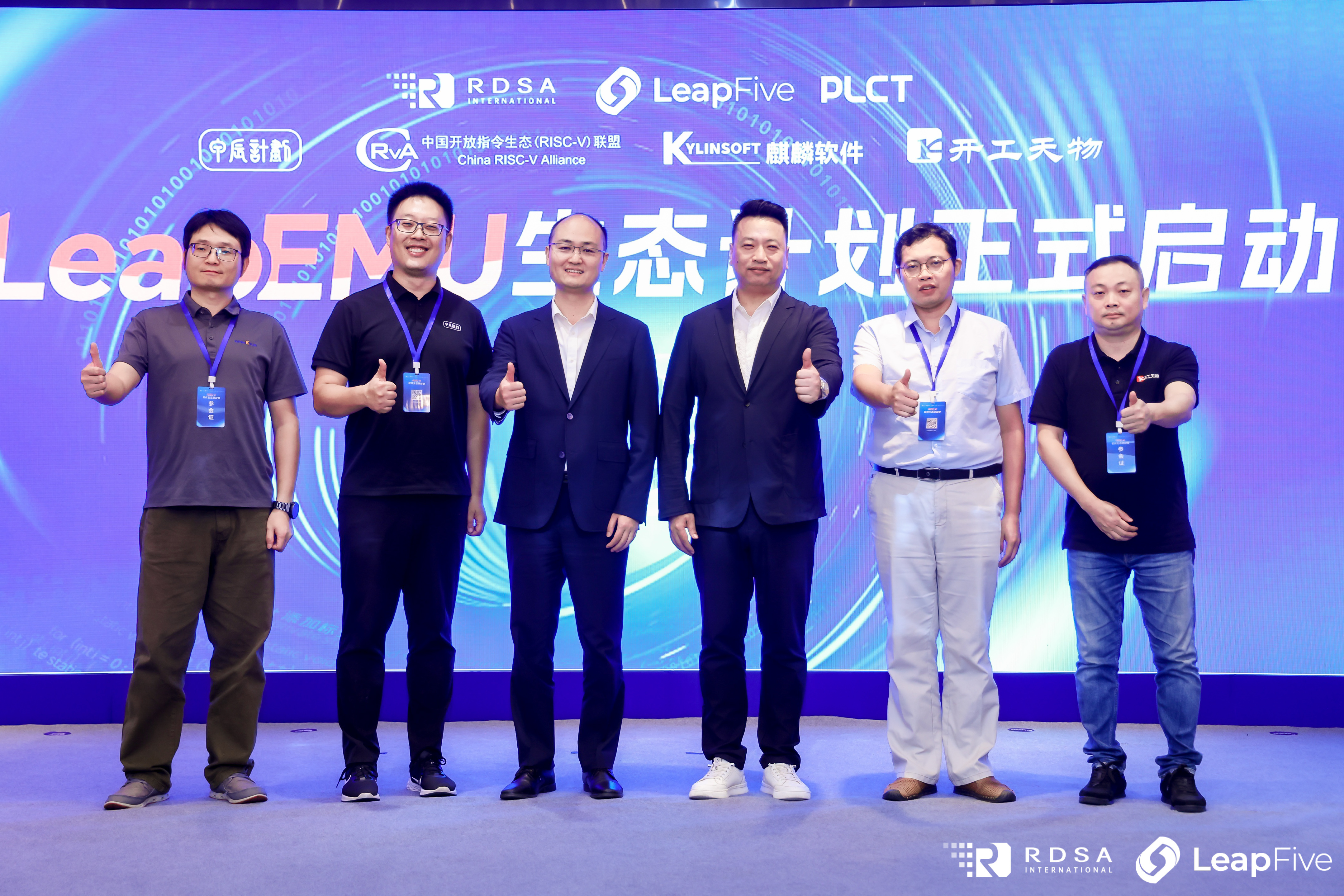
From left to right, standing are Tan Xi, Manager of the XPU Ecosystem Department at Kylin Software; Wu Wei, Founder of the PLCT Laboratory at the Institute of Software, Chinese Academy of Sciences; Xie Hao, Secretary-General of the RDSA Industry Alliance; Yuan Bohu, Chief Operating Officer of Yuefang Technology; Wang Jun, Secretary-General of the Zhuhai Center of the China Open Instruction Ecosystem (RISC-V) Alliance; and Tian Jijun, Chairman of Shenzhen Kaigong Tianwu Technology Co., Ltd.
Du Yu, General Manager of the Data Center Business Unit at Yuefang Technology, provided a detailed overview of the LeapEMU ecosystem initiative. This ecosystem is driven by a dual-engine approach—focusing simultaneously on both the “developer ecosystem” and the “end-user ecosystem.” Through collaborative efforts among chip companies, application developers, standards organizations, OEM/ODM manufacturers, and the open-source community, the ecosystem aims to establish a complete closed loop—from technology validation all the way through to practical application deployment. Over the next three years, LeapEMU will gradually enhance its support for the RVA23 baseline environment, multi-distribution compatibility, and the development of a high-performance application ecosystem. Additionally, through initiatives such as donation programs, cloud service partnerships, and feedback mechanisms, LeapEMU will continue to foster the sustained prosperity of the ecosystem.
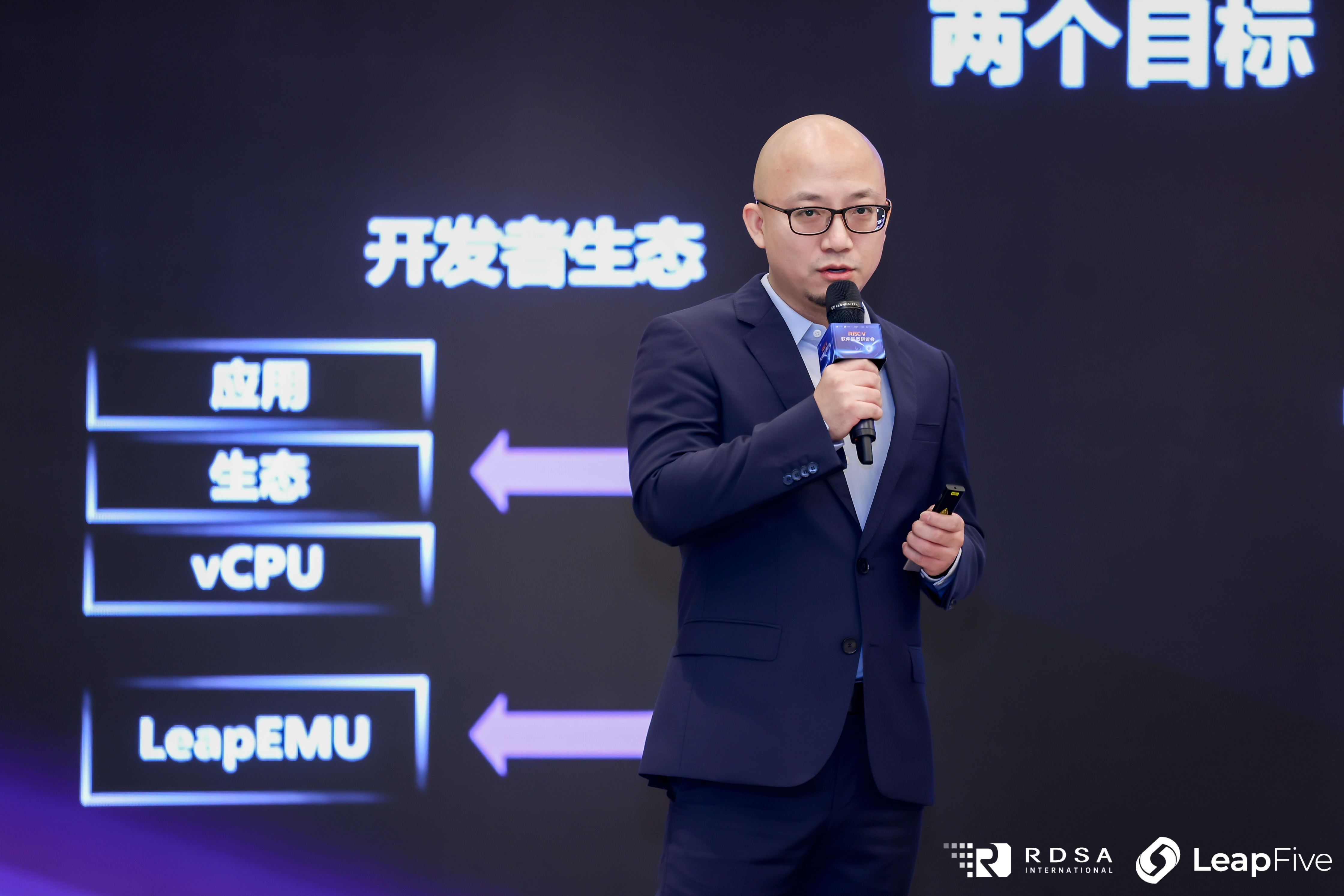
Du Yu, General Manager of the Data Center Division at Yuefang Technology, delivered a keynote speech.
The roundtable discussion was moderated by Wu Wei, founder of the PLCT Laboratory at the Institute of Software, Chinese Academy of Sciences. Guests—including Xiao Kun, Deputy Director of the Embedded Software Engineering Center at the University of Electronic Science and Technology of China; Wang Shaoyong, Director of the Chip Laboratory at the Central Research Institute and Head of Strategic Planning at Superfusion; Zhang Xinyu, Executive Director at Huajin Capital; Huang Chao, Marketing Director at Yixing Intelligence; and Yuan Suicong, Director of the Data Center R&D Department at Yuefang Technology—engaged in an in-depth discussion on “The Development of the RISC-V Software Ecosystem.”
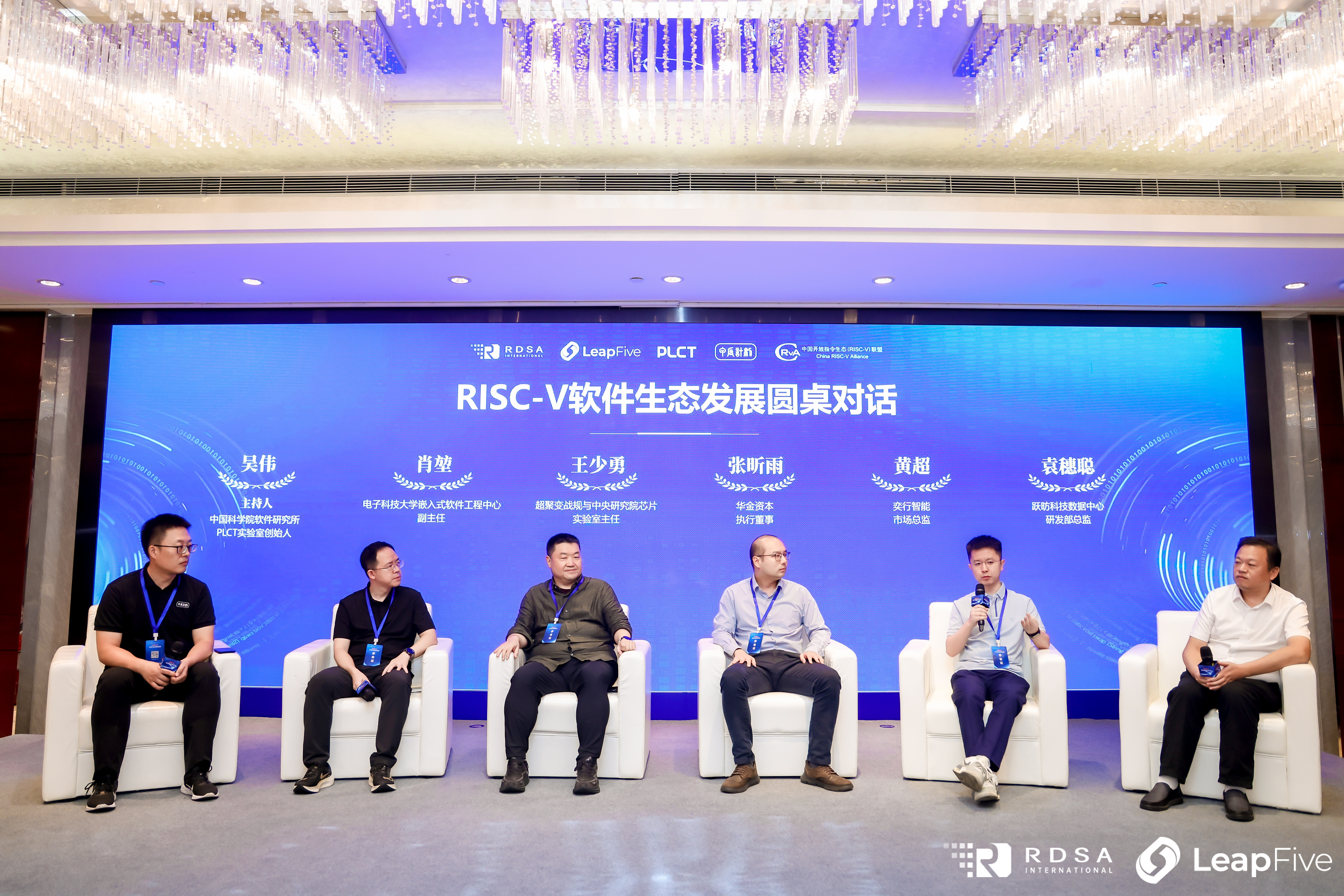
The guests exchanged views on topics such as technological breakthroughs, the integration of industry and education, capital support, and the expansion of application scenarios. They emphasized the importance of jointly developing standards, cultivating talent, and fostering collaboration across the industrial chain, providing diverse and in-depth insights for ecosystem development.
This seminar is not only a grand gathering for technical exchange but also a deep mobilization of the industry ecosystem. With the official launch of the LeapEMU product and ecosystem initiative, the RISC-V industry has taken a crucial and solid step forward in building its software ecosystem. Looking ahead, Yuefang Technology will continue to collaborate closely with partners from all sectors to jointly build an open, collaborative, and innovative RISC-V software ecosystem, injecting new momentum into the high-quality development of China’s integrated circuit industry.